Description
Oxytocin — Peptide Nasal Spray for Neurochemical & Behavioral Research
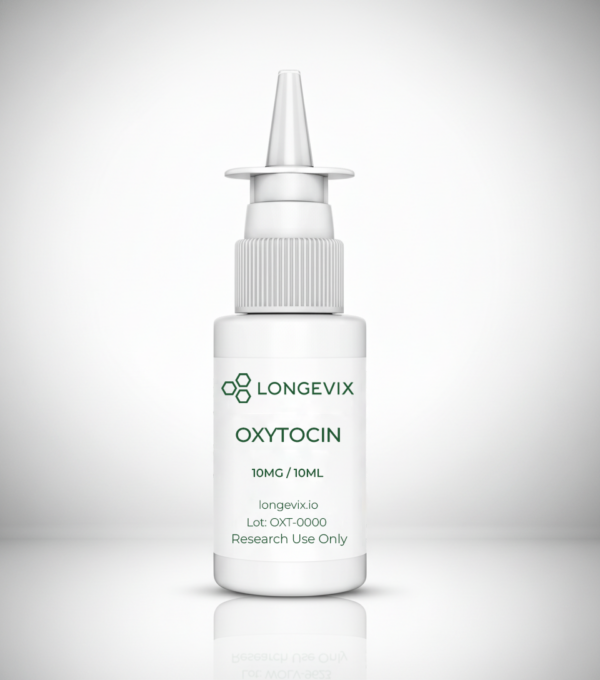
Oxytocin is a naturally occurring neuropeptide widely studied in laboratory and preclinical research for its role in neurochemical signaling, social behavior modeling, and neuroendocrine regulation. This Oxytocin 10 MG nasal spray is formulated specifically for research and analytical applications, providing a consistent intranasal delivery format for controlled experimental investigation.
In scientific literature, oxytocin is examined for its involvement in central nervous system communication, hypothalamic signaling pathways, and hormone–neurotransmitter interactions. The nasal spray format supports research into peptide transport, absorption modeling, and formulation stability in intranasal delivery systems.
Research Areas of Interest
✅ Neurochemical Signaling Studies – Oxytocin is examined for its role in central nervous system signaling and neuromodulatory activity in laboratory models.
✅ Behavioral & Social Interaction Research – Studied in experimental settings involving social behavior markers, bonding-related pathways, and adaptive behavioral responses.
✅ Neuroendocrine Pathway Evaluation – Investigated for its involvement in hypothalamic–pituitary signaling and hormone-mediated regulatory mechanisms.
✅ Stress & Adaptation Models – Explored in preclinical research related to stress-response signaling and autonomic nervous system balance.
✅ Intranasal Delivery & Stability Research – The nasal spray format supports studies on peptide absorption, transport efficiency, and molecular integrity during intranasal administration.
All references apply strictly to laboratory and preclinical research contexts.
Scientific Overview
Oxytocin is a nonapeptide hormone synthesized in the hypothalamus and released through the posterior pituitary, where it functions as both a hormone and a neuromodulator. In research literature, oxytocin is widely studied for its influence on central signaling pathways related to social cognition, emotional processing, and neuroendocrine regulation.
Due to its short half-life and peptide structure, oxytocin is frequently used in formulation and delivery research, particularly in intranasal models designed to study central nervous system access and peptide stability.
Mechanism of Action (Research Context)
Oxytocin Receptor Interaction:
Oxytocin is studied for its selective binding to oxytocin receptors (OXTR) in central and peripheral research models.
Neuroendocrine Signaling:
Investigated for its role in hypothalamic signaling pathways and hormone-mediated communication systems.
Behavioral Pathway Analysis:
Used in laboratory studies exploring social behavior markers, emotional regulation, and adaptive neural responses.
Peptide Transport & Nasal Absorption:
The intranasal formulation supports research into CNS delivery modeling, absorption kinetics, and peptide integrity.
Quality, Formulation & Packaging
Purity: Verified through analytical testing methods such as HPLC/MS
Form: Nasal spray solution designed for research convenience
Strength: 10 MG total peptide content per unit
Production: Small-batch formulation under controlled laboratory conditions
Packaging: Sealed units to ensure stability, consistency, and traceability
Fulfillment: Ships from a U.S.-based, climate-controlled facility with tracked delivery
Usage & Research Compliance
Oxytocin nasal spray is supplied strictly for laboratory research and analytical use.
-
Not intended for human or animal consumption
-
Not a drug, dietary supplement, or therapeutic product
-
No medical, behavioral, or performance claims are made or implied
This product is intended solely for qualified research environments where appropriate handling, storage, and regulatory compliance procedures are followed.