Description
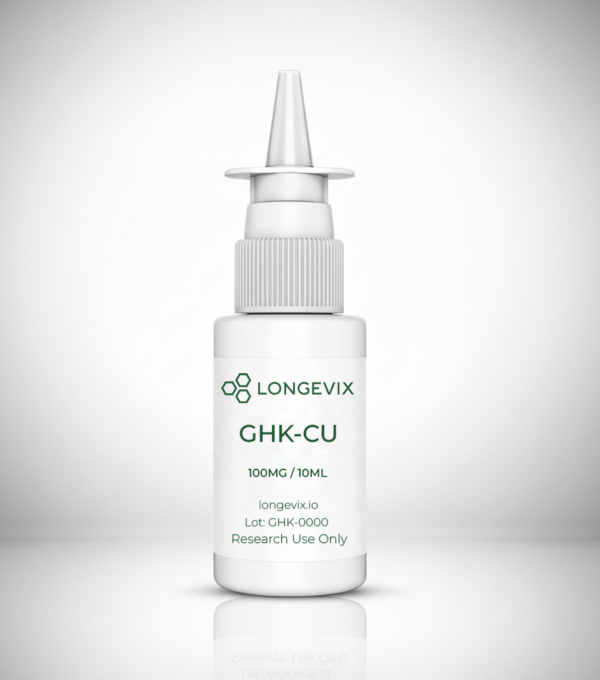
GHK-Cu — Copper Peptide Nasal Spray for Cellular & Regenerative Research
GHK-Cu (Copper Tripeptide-1) is a naturally occurring copper-binding peptide extensively studied in laboratory and preclinical research for its role in cellular signaling, tissue remodeling pathways, and peptide-metal interactions. This GHK-Cu 100 MG nasal spray is formulated exclusively for research and analytical applications, providing a consistent intranasal delivery format for controlled experimental investigation.
In scientific literature, GHK-Cu is examined for its involvement in gene expression modulation, extracellular matrix signaling, and cellular communication pathways associated with tissue integrity and repair mechanisms. The nasal spray format supports research into intranasal peptide delivery, absorption modeling, and formulation stability.
Research Areas of Interest
✅ Cellular Signaling & Gene Expression Studies – GHK-Cu is widely studied for its influence on gene expression patterns related to cellular maintenance and regeneration in laboratory models.
✅ Tissue Remodeling & Extracellular Matrix Research – Examined in experimental settings involving collagen signaling, elastin pathways, and structural protein regulation.
✅ Copper-Peptide Interaction Analysis – Investigated for its role in copper transport, peptide-metal binding dynamics, and trace element signaling pathways.
✅ Anti-Inflammatory Pathway Research – Studied in preclinical models related to inflammatory signaling balance and cellular stress responses.
✅ Intranasal Delivery & Stability Research – The nasal spray format supports investigation into peptide absorption, molecular integrity, and formulation performance during intranasal administration.
All references apply strictly to laboratory and preclinical research contexts.
Scientific Overview
GHK-Cu is a naturally occurring tripeptide composed of glycine, histidine, and lysine, complexed with a copper ion. It is found endogenously in human plasma, saliva, and urine, and its concentration has been observed to change with age in research settings.
Due to its high affinity for copper and its broad signaling activity, GHK-Cu is frequently used in experimental research involving wound response pathways, tissue regeneration signaling, and peptide-driven gene modulation. Its stability and versatility also make it a common subject in formulation and delivery research, including intranasal peptide systems.
Mechanism of Action (Research Context)
Cellular Communication & Gene Modulation:
GHK-Cu is studied for its ability to influence gene expression related to tissue maintenance, repair signaling, and cellular turnover in laboratory models.
Copper Transport & Binding Dynamics:
Investigated for its role in regulating copper availability and peptide-metal interaction pathways.
Extracellular Matrix Signaling:
Used in research examining collagen synthesis pathways, elastin organization, and matrix remodeling processes.
Peptide Stability & Nasal Absorption:
The intranasal formulation supports research into peptide transport, absorption kinetics, and molecular stability.
Quality, Formulation & Packaging
Purity: Verified via analytical testing methods such as HPLC/MS
Form: Nasal spray solution designed for research convenience
Production: Small-batch formulation under controlled laboratory conditions
Packaging: Sealed units to ensure stability, consistency, and traceability
Fulfillment: Ships from a U.S.-based, climate-controlled facility with tracked delivery
Usage & Research Compliance
GHK-Cu nasal spray is supplied strictly for laboratory research and analytical use.
-
Not intended for human or animal consumption
-
Not a drug, dietary supplement, cosmetic, or therapeutic product
-
No medical, dermatological, or performance claims are made or implied
This product is intended solely for qualified research environments where proper handling, storage, and regulatory compliance procedures are observed.