Description
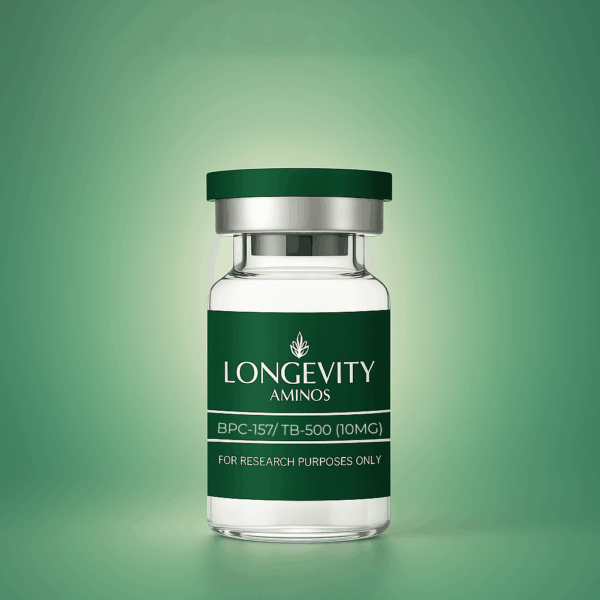
Advanced Scientific Analysis of the BPC-157 + TB-500 Peptide Blend
The BPC-157 + TB-500 peptide blend represents one of the most strategically aligned combinations in modern regenerative research. Individually, each peptide is known for its impressive tissue-supporting properties—yet when combined, their synergistic profile creates a broader, more efficient recovery environment across muscle, tendon, ligament, vascular, and neural systems.
BPC-157 (Body Protection Compound-157), a gastric-derived peptide, is respected for its localized regenerative influence, while TB-500 (a fragment of Thymosin Beta-4) is valued for its ability to drive systemic cellular migration, angiogenesis, and full-body repair responses. The result: a peptide pairing frequently utilized in research settings where accelerated recovery and enhanced tissue resilience are primary endpoints.
Mechanisms of Action
BPC-157
Angiogenesis Optimization:
Supports VEGF (vascular endothelial growth factor) activity, encouraging new blood vessel formation for improved nutrient delivery and faster repair.
Inflammation Modulation:
Downregulates pro-inflammatory cytokines and oxidative stress markers, helping maintain a balanced recovery environment.
Connective Tissue Restoration:
Promotes fibroblast migration and collagen synthesis, supporting tendon and ligament repair pathways.
Neural Support:
Shows neuroprotective effects, including enhanced nerve outgrowth and protection from stress-induced cellular damage.
TB-500
Cellular Migration Enhancement:
Drives actin upregulation, allowing repair cells to mobilize rapidly toward areas of tissue stress or injury.
Structural Tissue Remodeling:
Supports regeneration in muscle, skin, and organ systems by stimulating new vascular and muscle fiber growth.
Anti-Fibrotic Influence:
Helps regulate inflammation and fibrosis, reducing excessive scar-tissue formation.
Systemic Recovery Support:
Circulates broadly, complementing the localized nature of BPC-157 with a whole-body recovery profile.
Pharmacology & Pharmacokinetics
Administration:
Commonly used in research via subcutaneous or intramuscular injection. May be targeted near specific tissues or applied systemically depending on the model.
Absorption & Distribution:
Both peptides distribute quickly; TB-500 exerts a wide systemic signature while BPC-157 demonstrates stronger localized protective activity.
Half-Life & Duration:
Precise human half-life data remains limited, but both peptides exhibit extended biological influence through gene-expression changes, angiogenic signaling, and regenerative cascades.
Clinical & Preclinical Research Insights
Studies and experimental models highlight the blend’s ability to:
-
Support rapid repair of muscles, tendons, ligaments, and connective tissues
-
Reduce localized and systemic inflammation
-
Enhance angiogenesis and accelerate remodeling of damaged tissue
-
Promote neural recovery and functional restoration
-
Support gastrointestinal integrity and reduce inflammatory stress
This combination is frequently selected in research environments focused on accelerated recovery from intense physical stress, trauma models, or degenerative tissue pathways.
Safety Profile
BPC-157:
Demonstrates a strong safety margin in available research, with minimal effects typically limited to mild local irritation.
TB-500:
Generally well-tolerated in preclinical studies, with no major organ or systemic toxicity reported.
Combined Use:
Anecdotal and research-setting reports often note enhanced outcomes with no meaningful increase in adverse findings. Both compounds are non-hormonal and do not interfere with endocrine pathways.
Regulatory Status
BPC-157 and TB-500 are classified strictly as research peptides. They are not FDA-approved for human or veterinary use and are supplied exclusively for scientific, laboratory, and educational research. Despite this, their role in regene